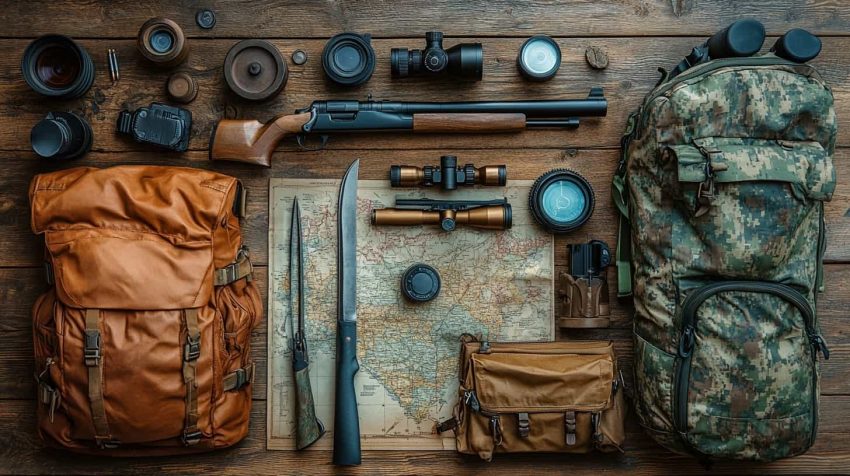
The resume of a seasonal worker, no matter how polished, does not always guarantee that a hiring manager will feel confident that the applicant can deal with wet gear, changing plans, tired clients and routine maintenance without being constantly supervised. A good resume contains the same evidence that one would hope to find in useful field equipment: specific duties, real dates, appropriate training and someone who can verify how one worked. Treat the resume as if it were field equipment: inspect it for weaknesses, strip it of unnecessary bulk and don't neglect to fix small problems before they become serious on a long day out.
Start with duties, not impressive-sounding labels
Just because you worked as an 'Outdoor Assistant' does not mean that everyone will understand your job. Try to break down your work into individual tasks that another person could read and verify. When listing out your experience as a 'Hunting Guide' make sure to list out specific tasks that you were responsible for such as 'Preparing routes for guided upland trips' or 'Checking and maintaining client's equipment'.
For example, instead of listing "prepared for guest arrival", list "briefed clients prior to departure" or "gave clients an orientation to camp". Also, make sure to distinguish between what you assisted with, what you were supervised to do and what you did independently. This will help hiring managers understand your full capabilities and limitations.
Use short paragraphs of 2-4 lines to detail specific examples of your work experience. Each paragraph should answer the following 3 questions for potential employers: 1) What did you do? 2) Where did you do it? 3) Who can verify it? For example, "Assisted senior hunting guide with guided upland trips. Conducted pre-trip equipment checks. Developed and led client orientations for all trips." Rather than listing out many occasional jobs, focus on the few that were your primary work.
Turn field ability into evidence someone can check
All of your outdoor experience counts, paid or unpaid, whether on your own or as part of a group. Volunteer work for habitat restoration, outdoor conservation projects, farm work, trail maintenance, work with youth, and organized camping trips are all relevant to outdoor work and should be documented and described in as much detail as possible, including the organization, supervisor, location, dates, and nature of the work.
Maintain documentation while the information is still fresh. This could be notes on the organization, supervisor, approximate location, time of year, duties and any safety or stewardship procedures in place. Collect relevant training documentation including role descriptions and written feedback and place them in one folder. Although you may not include all of this information when applying for jobs, having it all in one place will help to ensure that dates are correct and that you do not exaggerate.
Failure to document past work can result in a resume that reads of 'extensive experience' of working outdoors but failing to highlight the useful work that was actually done in remote places. The worst example of this is a list of places that the applicant has worked in remote locations but failing to describe the nature of the work that was actually done there.
Be sure to ask the references that you will be listing for this job for their current contact information as well as the time frame in which they can speak to your performance. Additionally, ask them what qualities they feel best describe you and ensure that you can list similar qualities from your previous supervisor(s).
Present certifications and wilderness skills with restraint
In regards to the certifications listed above, include the issuing body, the course or certification name, the completion date, and whether or not it has been renewed or if it has expired. Remember that short workshops are not the same as professional qualifications. List the formal training that you have received and indicate your level of ability for your other repeated practice outside of work.
Formal training in skills such as first aid, map reading, camping, and cooking over a campfire are all useful, but it is essential to clearly state your level of experience in each skill, whether it was formal training or simply repeated practice. Wild Camping, for example, is not simply camping in the wild, it requires a number of skills and a huge amount of experience to be able to do safely and responsibly. It is essential to clearly state your level of experience with each skill to prevent employers misunderstanding your abilities.
Another area to watch is for resumes with long lists of skills. Many people with an outdoor background list out every skill or interest that they have. While it is good to have many skills, a resume should also show judgment. List out the most relevant skills first, and then in the work history or in a short qualifications section below describe how you applied each of them.
Treat gear care as part of your work record
An outdoor employer wants to know that you can look after the equipment in order to prevent problems with the work of others. You can describe your maintenance habits by referring to how you dealt with problems with field equipment. For example: checked boots, fuel systems, packs, ropes, optics, vehicles and camp equipment before use; reported damaged items; cleaned all equipment after use; stored equipment in accordance with set procedures; maintained an up-to-date inventory of all equipment whilst on work experience under direction of senior staff member.
The check was made, the symptom identified and response taken. You simply state the fact of the damage/leak/loss etc. and what you did in response. You do not state that you repaired something safety critical unless you are trained and authorized to do so.
This same rule applies when mentioning work that you have done in terms of habitat conservation or in terms of stewardship. If for example you have done habitat work, you would mention careful access to the area, using low-impact methods, removal of waste, knowing and adhering to boundaries as well as accurately reporting all your work.
Make the document easy to inspect
Display contact information, a brief summary and your most recent and most relevant experience at the top of your resume. List your certifications, your practical skills and your education/volunteer work in subsequent sections. Use a simple format so that all of the dates, employers and responsibilities can easily be read whether on a phone or printed out.
Read your application as if you were a manager looking for someone to fill a specific job. Would you be able to tell that you had experience giving guest talks or that you did careful habitat maintenance? Would you be able to tell that the applicant had really taken the time to learn about backcountry travel as opposed to just reading about it and claiming to have experience?
Be sure to tailor your outdoor work resume to the needs of the position for which you are applying and make sure to list the duties of the most relevant work in the best position. Remove irrelevant information and use the terms and description of duties of the position for which you are applying in the best part of your resume. Keep a master copy of your resume and make copies as needed for applications.
A seasonal outdoor work resume does not have to read like a novel of adventure. Rather, a good resume consists of verifiable facts about the work that you have done, accountably-worded descriptions of your experiences, and good references from current or past supervisors who can speak to how you work under less-than-ideal circumstances. Identify unclear statements, expired training, and unverifiable experiences in your resume and fix them before submitting your application. Inspect your own gear before venturing out into the field.